Language:



A corrugated box has two jobs: protect the product and sell it. For years, buyers had to choose between the two. A plain shipping carton protected well but looked plain. A folding carton printed beautifully but could not take the same punishment in transit.
Litho-laminated corrugated boxes close that gap. The artwork is offset-printed on a separate paper sheet, then laminated onto corrugated board. The result is a box with the colour quality of a retail carton and the strength of a shipping box. This guide explains how litho-lamination works, how it compares with printing directly on corrugated board, and what to check before you place an order.
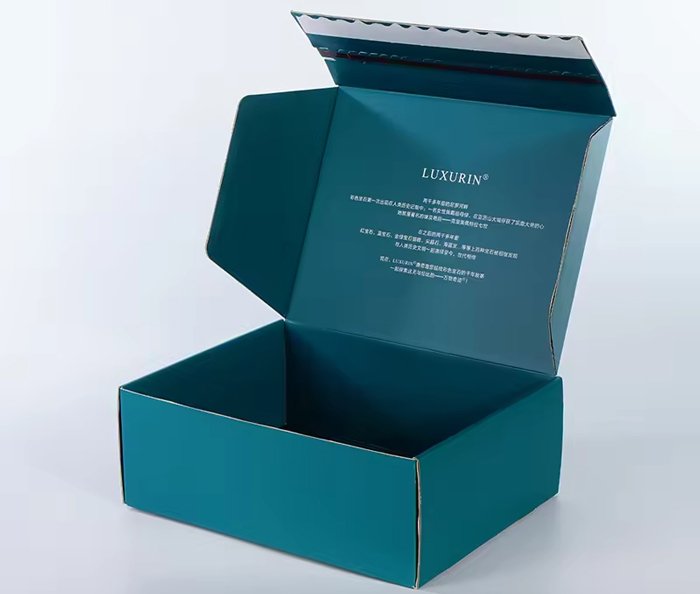
A litho-laminated corrugated box — often shortened to litho-lam — is a corrugated box whose printed surface is a sheet of paper printed by offset lithography and bonded to the corrugated board.
The structure has three parts:
Because the artwork is printed on smooth paper rather than directly on the wavy surface of corrugated board, fine text stays sharp, photographs reproduce cleanly, and large areas of solid colour look even. That is the whole point of the construction: the board does the protecting, and the printed sheet does the selling.
The process has four main stages.
Each stage is separate, so a problem in one stage can be caught before it becomes a problem in the next. A misprinted sheet, for example, is rejected before it is laminated to board.
Most corrugated boxes are printed by flexography — ink applied directly to the board. Flexo is fast and economical, and it suits bold logos and simple graphics. Litho-lam costs more and takes more steps, so the choice comes down to what the artwork demands.
Print quality is where litho-lam wins clearly. Offset printing on coated paper holds fine text, small type, skin tones in photographs and smooth gradients. Direct flexo on kraft or white-top board softens fine detail, because the board surface is uneven and absorbent.

Colour range is similar in principle — both methods use CMYK — but litho-lam gives more predictable results across a print run, and spot colours can be added when a brand colour must match exactly. If your brand colour is a specific Pantone shade that also appears on your website and labels, ask your supplier whether it can be matched on the printed sheet before lamination.
Cost and quantity work in opposite directions. Flexo is usually cheaper at small quantities and for simple artwork. Litho-lam becomes the better value when print quality drives the purchase decision — retail-ready packaging, subscription boxes, electronics, cosmetics and gift sets that ship directly to the customer.
Speed is the trade-off. A litho-lam order has more steps, so allow extra time in your schedule. Ask for a physical sample before mass production, especially for a first order or a new box structure. A printed sample shows the real colour on the real board, which a screen proof cannot.
Litho-lam fits best when the box is both the shipping container and the shelf display. Typical cases are e-commerce and subscription boxes that arrive at the customer’s door, electronics and consumer goods that sit on a retail shelf next to competitors, cosmetics and gift sets where photography and fine detail carry the brand, and promotional or limited-edition packaging where the print itself is part of the product.

It is less necessary when the box will be covered by an outer shipper, when the artwork is a single-colour logo, or when the budget only stretches to a plain shipping carton. In those cases direct flexo printing, or even an unprinted box with a printed label, may be the sensible choice.
A short checklist covers most of what goes wrong with litho-lam orders.
To get an accurate quotation, send the supplier the box dimensions, the product weight, the artwork, the estimated quantity and the delivery destination. With those details, Unico can recommend the board, the flute, the printing approach and the finishes that fit the product and the budget. Contact the sales team at sales@unicopacking.com or +86-138-1120-5110.
Yes. The corrugated board underneath is the same board used in a standard corrugated box, so the strength comes from the board, not the printed sheet. The printed sheet adds almost no strength, but it takes none away either.
Inside printing is possible, but it is a separate decision. The printed sheet covers the outside; the inside face is usually the plain liner of the board. If you need inside printing, tell the supplier at the quotation stage, because it changes the board specification.
In litho-lam, the artwork is offset-printed on a paper sheet and then laminated to the board. In flexo, the ink is printed directly onto the board. Litho-lam gives sharper detail and smoother colour; flexo is faster and more economical for simple artwork.
It can, but the setup cost of offset printing and mounting is spread across the run, so the unit price falls as quantities rise. For very small runs, ask the supplier whether digital printing on the top sheet is an option.
Contact: Lisa Lee, Andy Chou
Phone: 0086-13811205110
Tel: 0574-83026853
Email: sales@unicopacking.com
Add: Liangzhu Village, Gaoqiao Town, Haishu District, Ningbo 315016, Zhejiang, China